
Navigation information
Home / Venice / Customer area / Navigation information
Many ships have moored in the Venetian quays and thousands upon thousands of sailors and captains have stepped down from their ships, touching “land” after long journeys.
They would all quickly realize that that they were not stepping on ordinary ground but on a “land” that’s been stolen from the sea. This is a city that seems to have emerged from the water rather than having been built.
Venice is one of the most interesting places to moor from a crew member’s perspective. It is not only a breathtaking experience for the guests but it is a token of memory for the entire crew.
infoPLEASE READ THE FOLLOWING INFORMATION CAREFULLY BEFORE ENTERING THE PORT for a peaceful, safe and respectful stay, and to prevent any mishaps or problems. Our team is at your complete disposal for any clarifications and additional information. Feel free to contact us.
info Entering and leaving the port
General info and rules
- Port entrance availability 24/7
- Entering the Venice VTS area, please approach the Harbor Master at VHF Channel 9 and comply with the VTS rules.
download Download: Venice VTS Manual - Pilot on board compulsory from 500 GRT if the Captain is not an italian language fluent speaker. Compulsory in any case if above 1500 GRT.Pilot VHF assistance service while optional for all units under 500 GRT, is compulsory for Italian language fluent speaker Captains between 500 GRT and 1500 GRT.Morring assistance, instead, is always compulsory over 500 GRT.Tug assistance compulsory over 2000GRT, if the bow thrusters are not in good efficiency. Always compulsory over 4000 GRT.
- The port fairway entrance will be at Lido port gateway.
Lido fairway port entrance coordinates: (N45°25’16.84’’ E12°25’52.94’’)
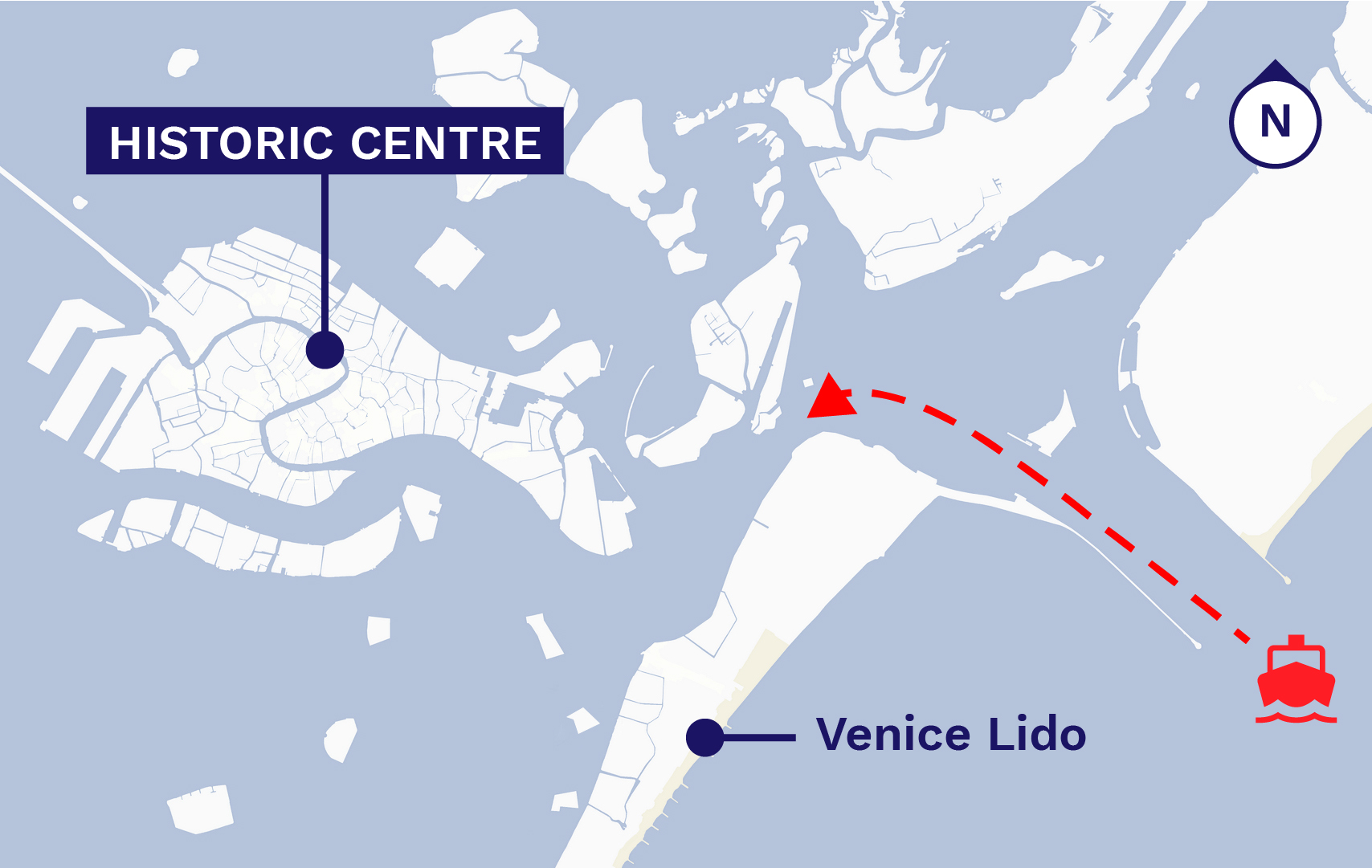
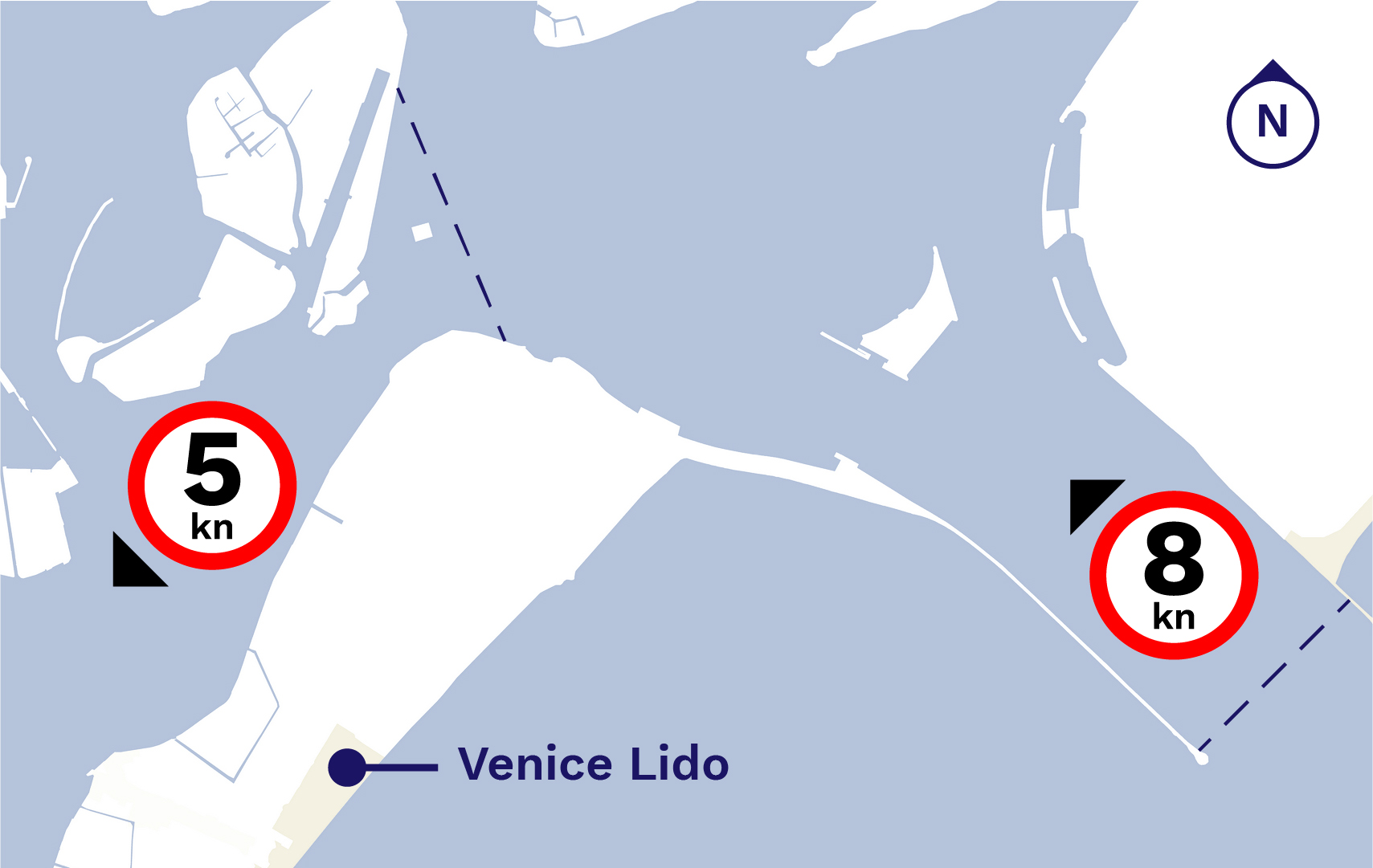
- The speed limit for the yachts entering and departing are 8 knots until the first turn to the left, then 5-6 knots all the way to the berth assigned.
- Beside clean water, no liquids can be discharged into the lagoon.
- The AIS system (if available) must be kept switched on during all the transition from the entrance to the berth
- The Immigration Police Office opening hours are:
Mon-Sat: 07.00-18.00
Sun: 07.00-12.00 (by appointment only)
Address:
Santa Croce, 491 30123 VeneziaOther than that for special reasons an appointment can be granted by the Immigraiton Police depending on their availability.
General info and rules
Please ensure that you have all the documentation required by the port authorities for the landing and sailing out of your specific vessel.
You can use our tool for guided completion and submission of formalities.
info
This feature is in development and will soon be available…
CONTACT US
Berths
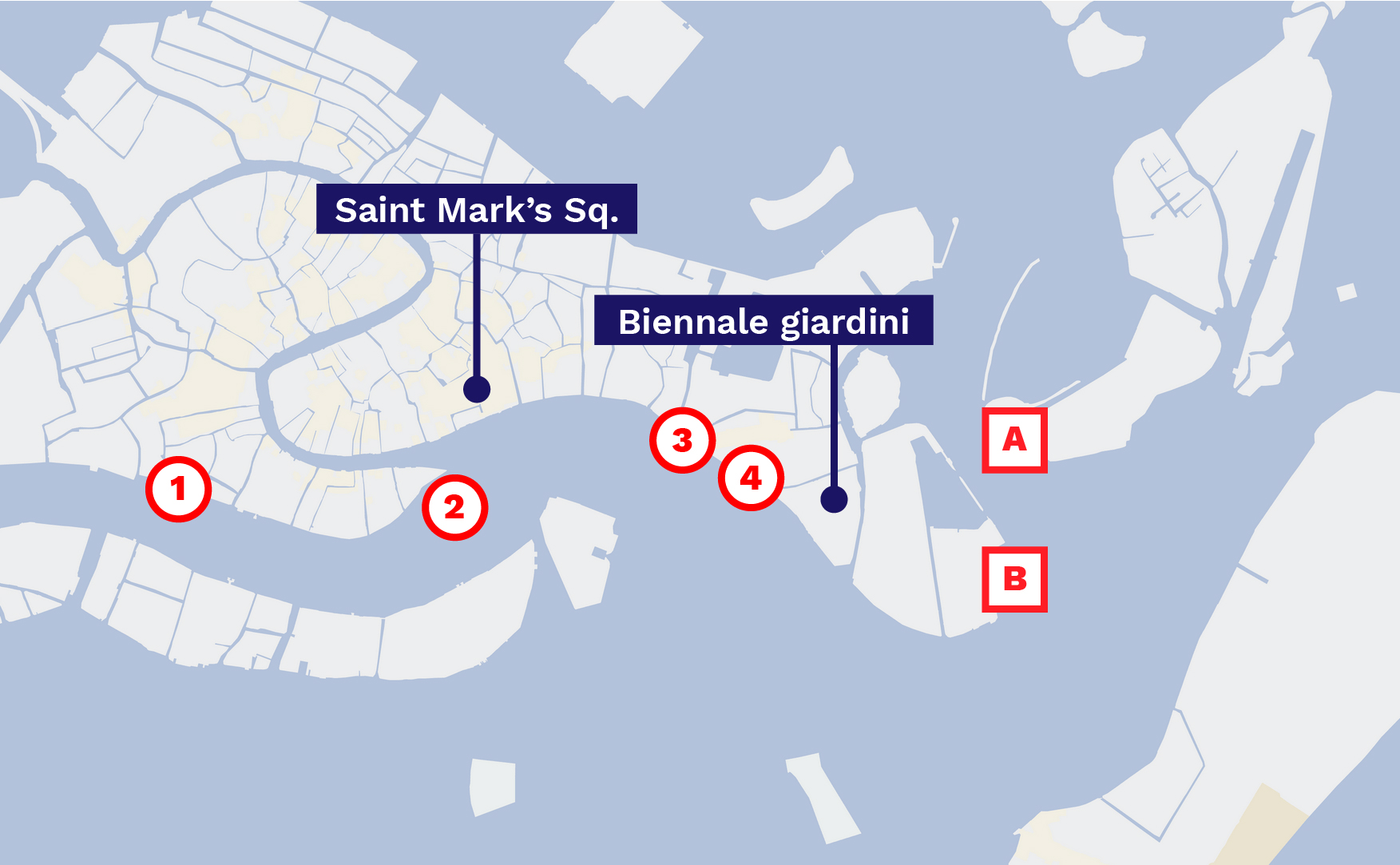
Berths in the city centre
- Zattere
- Pali Salute
- Riva San Biagio
- Riva Sette martiri
Marinas
- Marina Vento di Venezia
- Marina Santelena
info Permanence
General info and rules
In the Marina you always have electrical power and fresh water supply, while at the city centre berths it depends on the specific berth.
Wash the yacht with water and vinegar only
It is important to note that the use of soap of any kind is forbidden in Venice (Italian law 5th March 1963 n.366).
Garbage collection and disposal
While at the Marina you have to bring the garbage to the specific areas, at the city center the same is collecated by boat. The garbage boat at the city centre comes every day in the morning from 09:00 to 12:00.
Navigating with a tender outside the city centre
- In the Venetian lagoon all units with an engine power over 10 hp need to have special licence plate. For yacht tender it is requested to have a visible way of recognization. Tenders to (T/T) must have clearly written the sign “T/T + name of yacht. Tenders with a indipendent registry, must have clearly stated the official number and the port of registration.
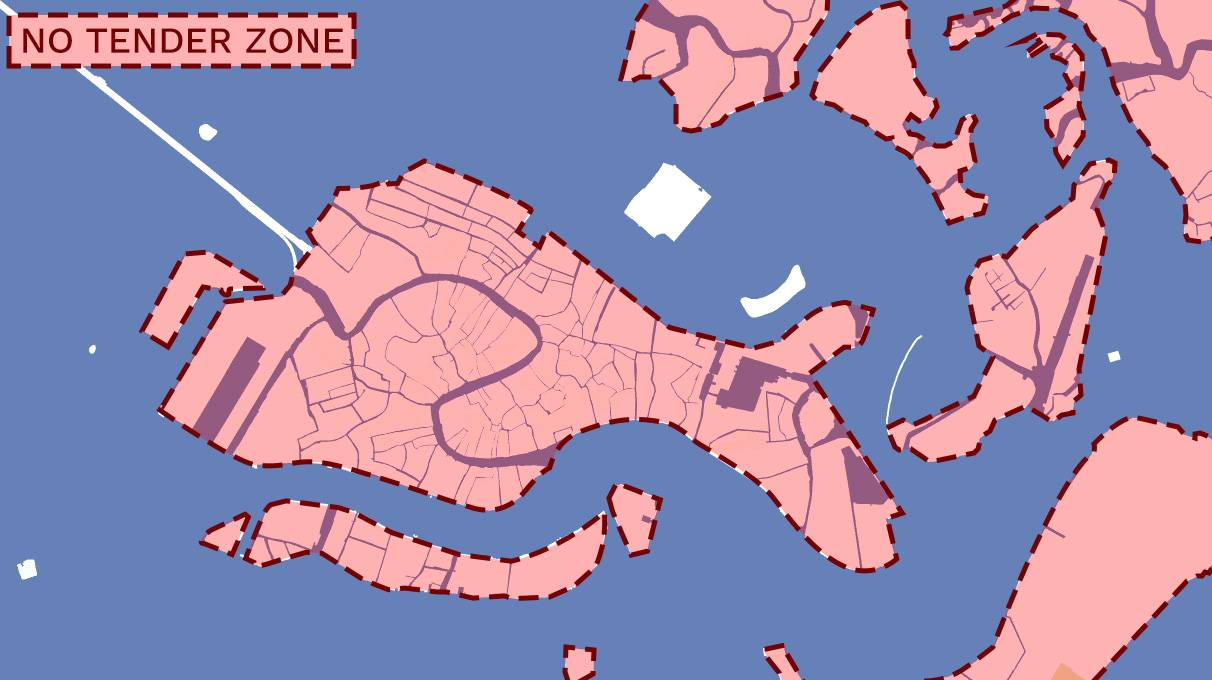
- Grand Canal and smaller canals are totally off limits to non-locally registered boats. It is only possible to cruise outside the city historic center. Please have a look at the map to learn more on tenders off limits zones:
- It is required that the tender driver carries his passport, the tender certificate and a copy of the yacht’s Certificate of Registry with him at all times.
- Once inside the lagoon speed limits come into force. Speed limits are posted on the poles in km/hr. We recommend proceeding slowly and taking special care when transiting the St. Mark’s basin which can be heavily congested.
- Generally speaking you should try to keep to the right when in a canal while also giving way to water-buses, ferries, cruise ships and any other vessel of restricted maneuverability.
- Generally speaking you should try to keep to the right when in a canal while also giving way to water-buses, ferries, cruise ships and any other vessel of restricted maneuverability.
- It is NOT possible to tie up the tender and leave it unattended.
Helicopters and drones
The use of an on-board helicopter, drones or flying equipments of any sort is forbidden in Venice historical center, as that is a no fly zone.
Water toys and swimming
In the historical center it is not allowed to use jet-skis or any water toy. Same goes for the swimming as all the waters there are navigational ones.
info
Seaweed Warning
We kindly suggest that you keep an eye on the yachts’ filters since there is a high concentration of seaweed in the lagoon that may cause them to become obstructed.
info Venice Lagoon Signposting Guide
Here is a brief guide to navigating and interpreting signs in the Venice lagoon. A historical and unique system, adapted over the centuries for navigation in this extremely peculiar environment.
Briccola
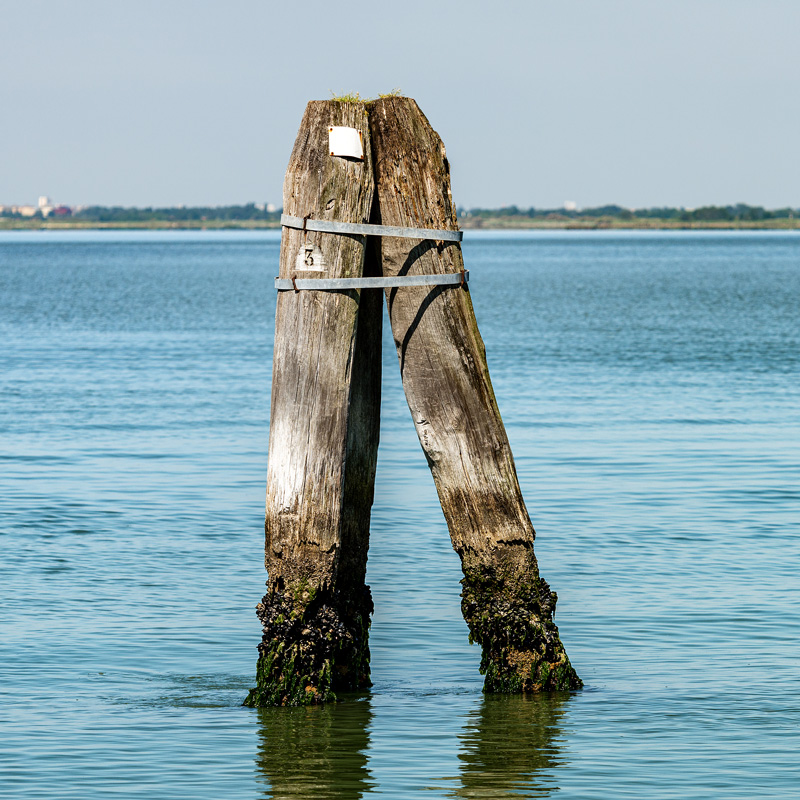
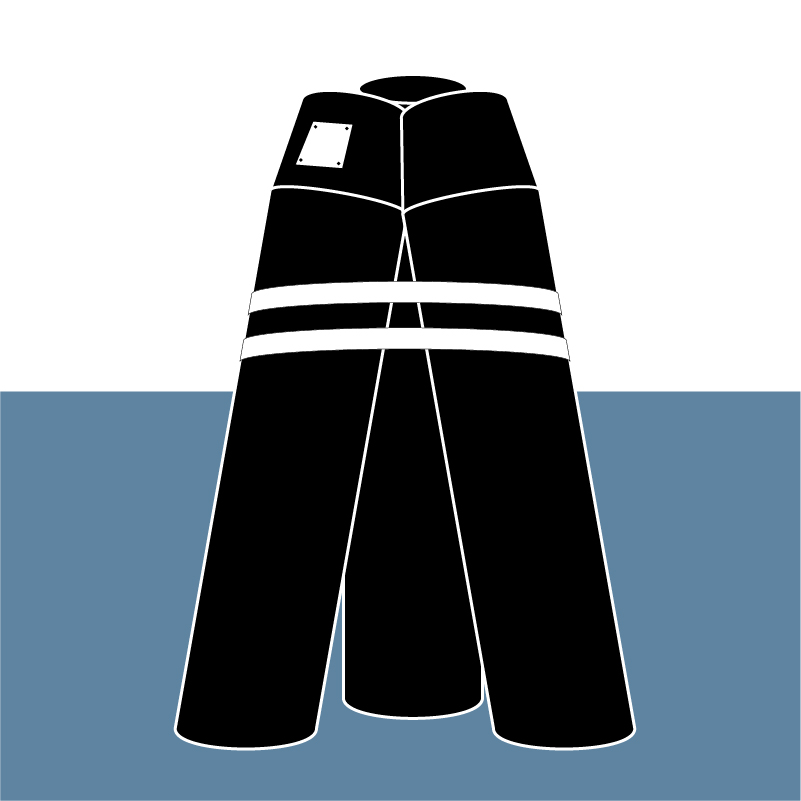
The basic signal to recognise is the ‘briccola’. It is a nautical structure used to indicate waterways (canals) in the Venice lagoon. It consists of two or more large larch wood poles tied together and placed in the water, driven into the seabed.
Canal
The briccole have a white rectangle attached to the side to mark the inside of the canal.
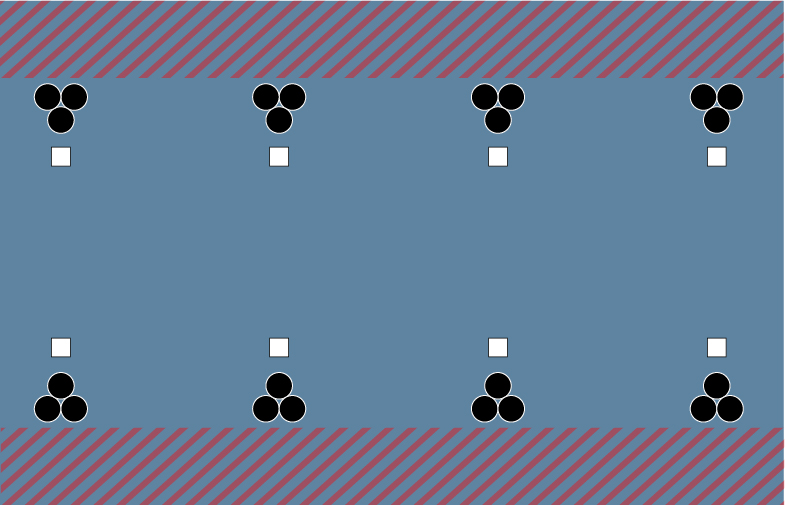
So if when looking at the briccole you can see the white rectangles, it means you are inside the canal. If not, you are on the wrong side of the briccola. It is important to stay inside the canal to avoid the risk of getting stranded in shallow water.
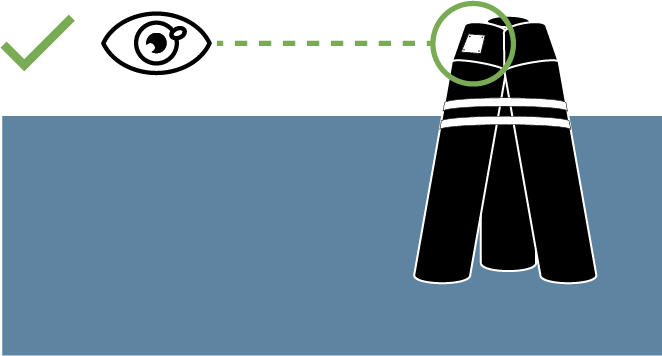
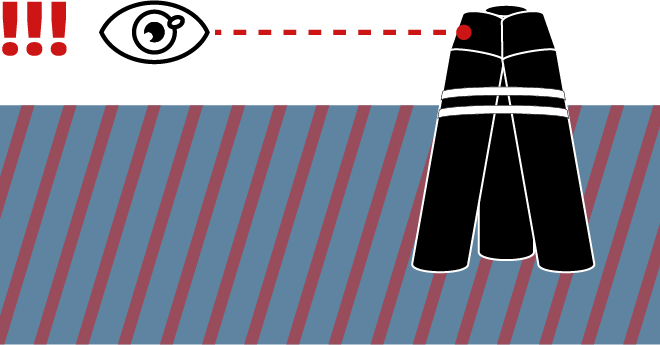
Remember that the canal may run along a bank. In this case there will be only one row of briccole.
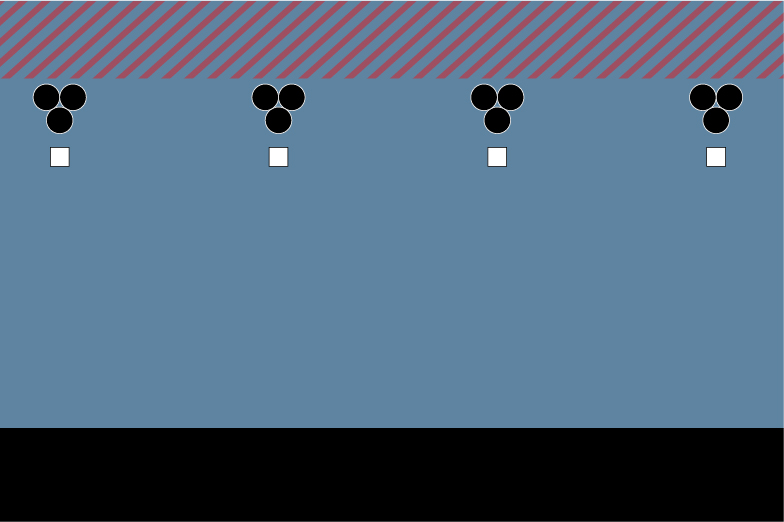
Crossroads
A special type of briccola, and one that is very important to recognise, is the one that marks the junction of several canals. It can be identified because it has an upright pole, which is higher than the others in the centre.
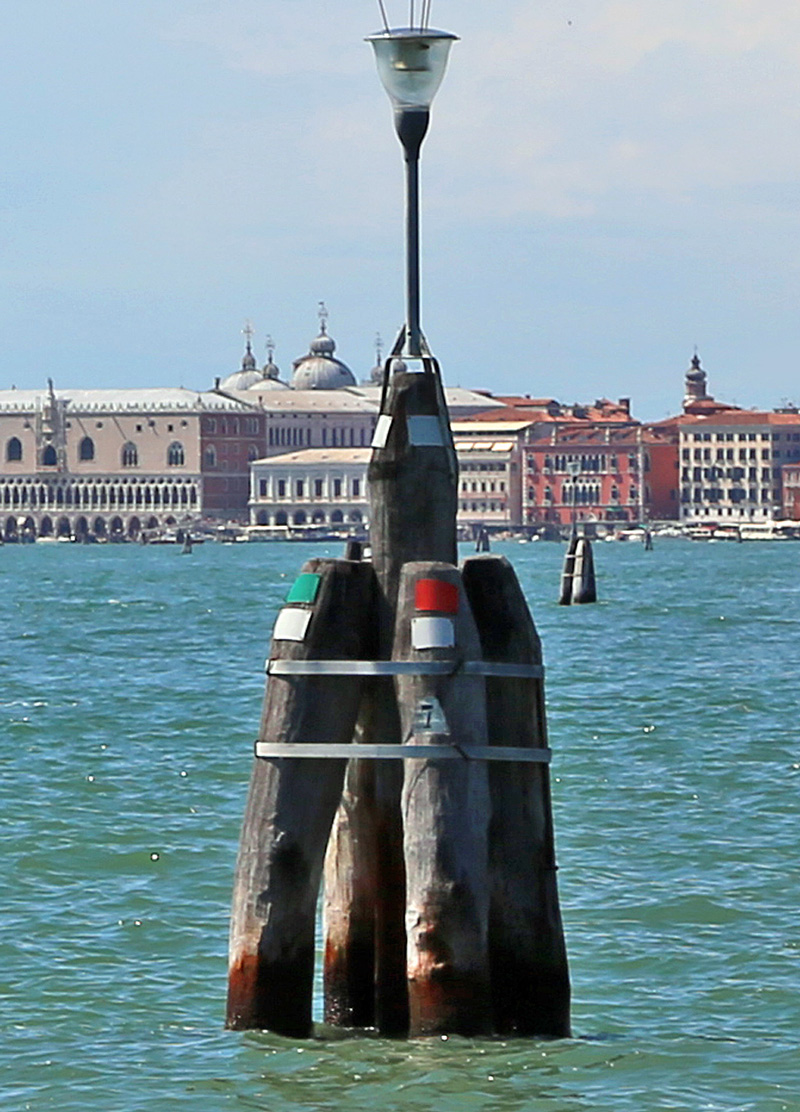
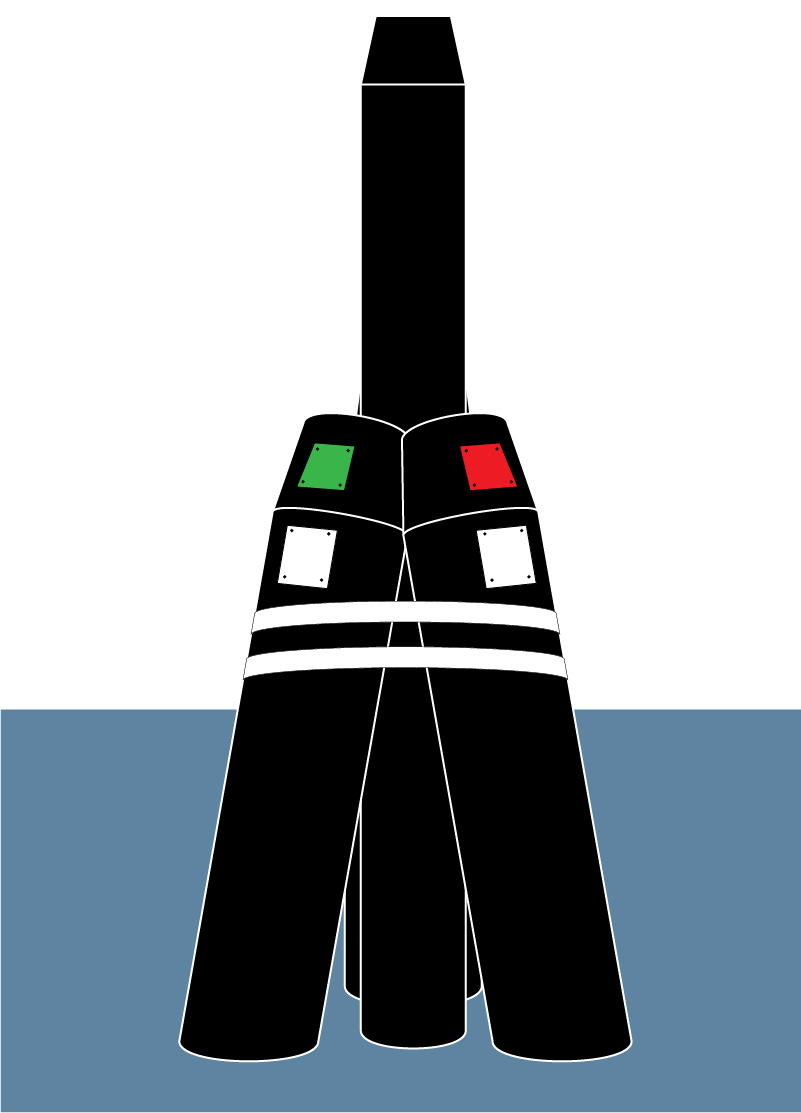
This type of briccole is located at the corners of the crossings and shows two white rectangles to indicate the inside of the canals that can be entered. In the pictures you can see two examples of bifurcations and T-junctions:
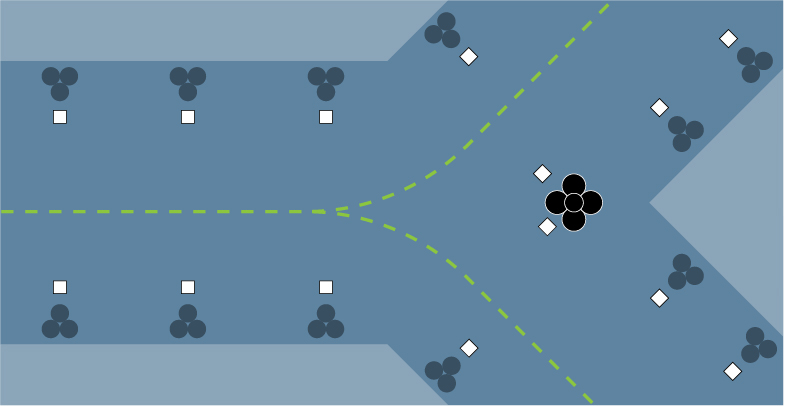
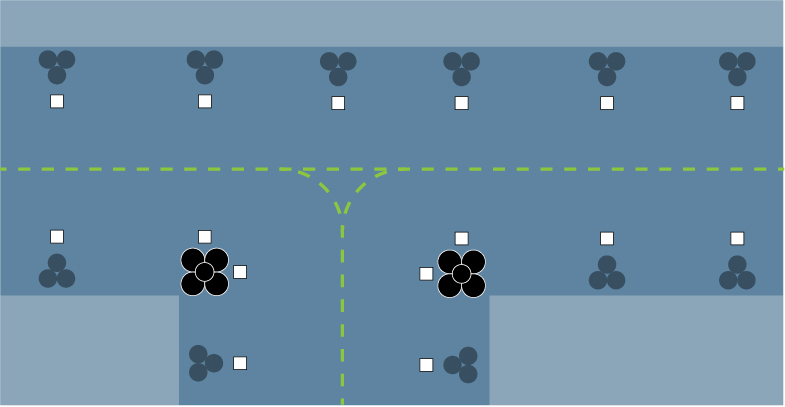
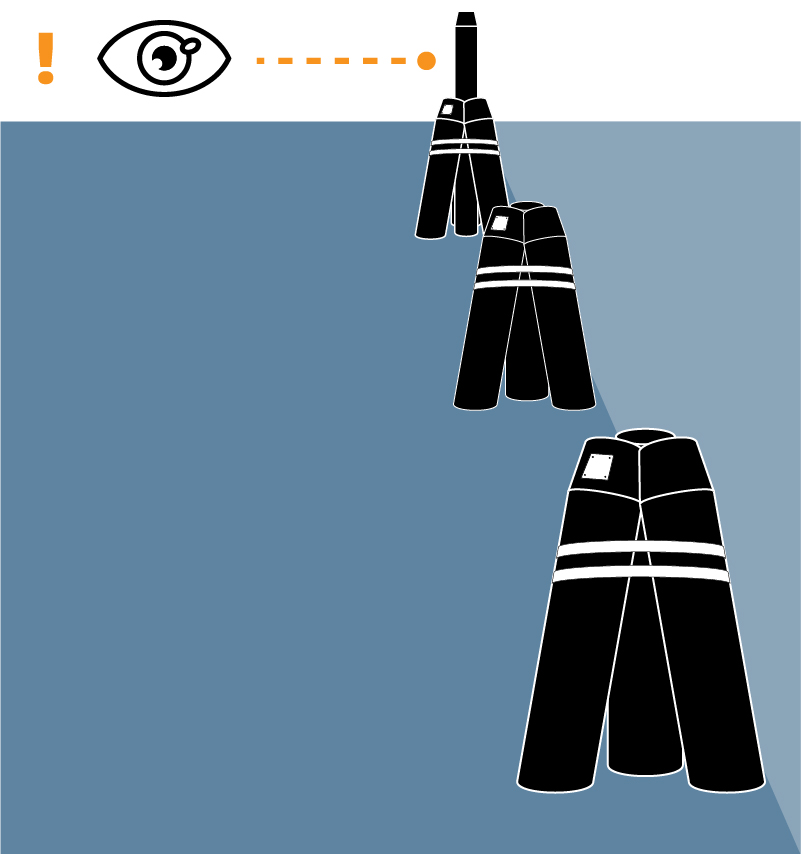
You can spot the crossroads from a distance thanks to the taller central pole that distinguishes these briccole. Be careful when approaching the crossroads: make sure you understand the route and check that there are no other boats approaching.
info
General warnings
- It is forbitten to moor to a signpost.
- Must always give way to pubblic transportation, and police, firefighter and ambulances when with active emercengy lights and sounds
- Navigating you shall keep the center-right part of the canals, leaving the external part to boat that requires rowing.
- A respectful way of sailing is one that doesn’t generate much or big waves
Do you need help?
Get in touch with our team!
 Operative Department